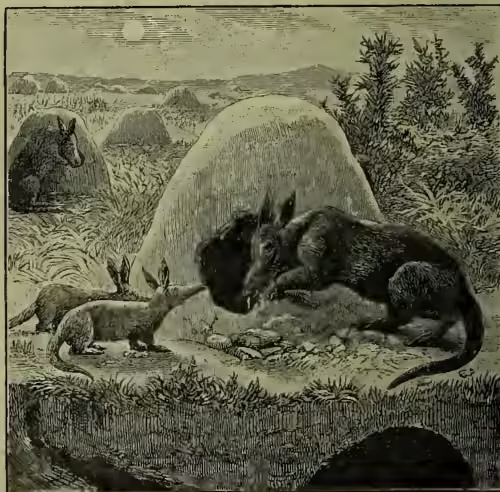
Aard-vark (Dutch 'earth-hog'), or CAPE ANT-EATER (Orycteropus capensis), one of the Edentata, and the only ant-eater with teeth. It has seven molars on each side above, and six on each side below; with neither incisors nor canine teeth. It is a stout animal, with long, pig-like snout, tubular mouth, the usual termite-catching tongue, large ears, fleshy tail, and short, bristly hair. The limbs are short and very muscular; on the fore feet are four, on the hind five powerful claws, used in burrowing and in excavating the hills of the white ants (see TERMITES), on which it feeds. It is nocturnal in its habits, and is very inoffensive and timid. When pursued, it can burrow itself out of sight in a few minutes, working inwards with such rapidity as to make it almost impossible to dig it out. Its total length is about five feet, of which the tail is 1 foot 9 inches. Its dwelling is a burrow at a little distance from the surface, and thence it may be observed creeping at dusk. Three species are known—one in South Africa, another in Senegal, and a third in South Nubia. The flesh is considered a delicacy. See ANT-EATERS.