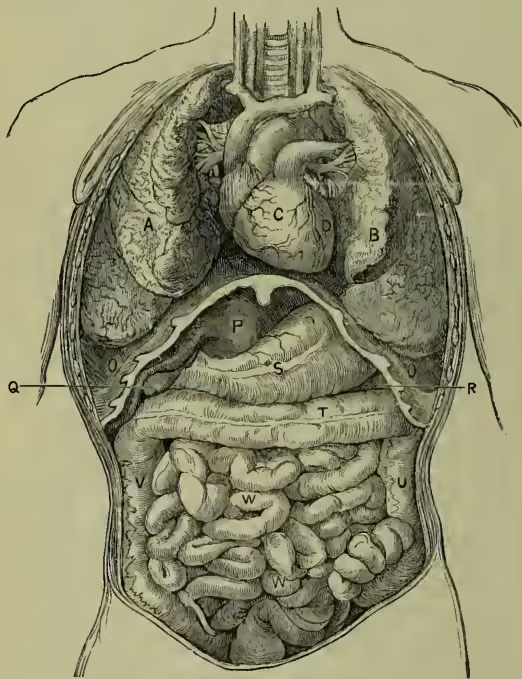
Abdomen. The trunk of the human body is divided by the diaphragm into two cavities—the upper being the thorax or chest, and the lower, the abdomen or belly. Both the cavity and the viscera it contains are included in the term abdomen. It is subdivided into two parts, the abdomen proper, and the pelvis, or basin. The former contains the liver, pancreas, spleen, and kidneys, as well as the stomach, small intestine, and large intestine or colon; the latter, the lowest part of the cavity, contains the lower bowel or rectum, the urinary bladder, and internal organs of generation. The abdomen is lined by a serous membrane, the peritoneum, which is folded over the viscera, allowing them a certain freedom of movement, but keeping them in their proper relations to each other. For the purpose of making accurate reference to the position of the contained organs, the abdomen proper is artificially divided externally by two horizontal lines into three principal zones—the upper, the middle, and the lower. These are again subdivided by two vertical lines into nine areas—the three lateral divisions upon either side being named from above downwards, the hypochondriac, lumbar, and iliac regions respectively; while the names epigastric, umbilical, and hypogastric, are applied from above downwards to the three mesial areas.
ABDOMEN, in Entomology, the posterior of the three parts into which the body of an insect is divided. See INSECT.