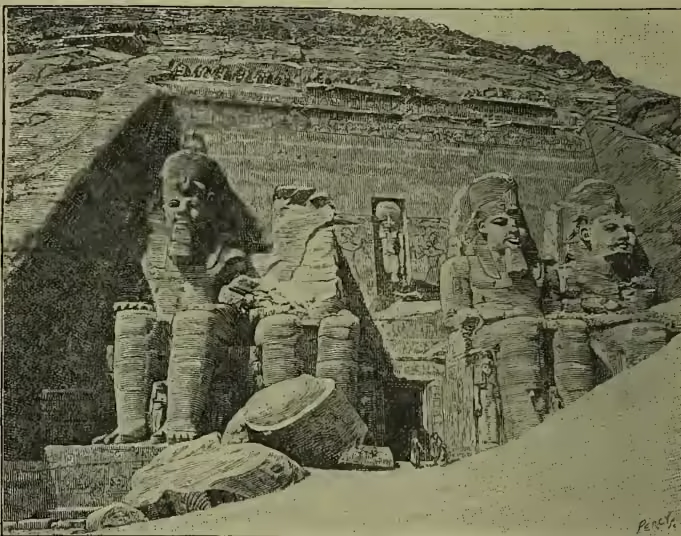
(From a Photograph by Frith.)
Abu-Simbel (also Abousambul or Ipsambul), a place on the left bank of the Nile, in Lower Nubia, the site of two very remarkable rock-cut temples, amongst the most perfect and noble specimens of Egyptian architecture. Here there is no exterior and constructed part; the rock out of which they have been excavated rises too near the river. Still the temples have their façade, as richly decorated and as monumental in its character as those of the most sumptuous edifices of Thebes. The colossal statues here, instead of being isolated monoliths, are a part of the façade itself, hewn out of the rock, though still forming part of it. The façade of the smaller temple, that of Hathor, is 88 feet long and 39 feet high. It has six colossal figures, about 32 feet high, of which four represent Rameses, and the other two his wife, Nefert-Ari. The façade of the great temple is larger, being 126 feet long and 93 feet high. The cornice is formed by twenty-two dog-headed figures seated, the fore-paws resting on the knees, each 8 feet high, sculptured in relief, only attached to the mountain by their hinder parts. Below the cornice runs a frieze formed by the dedicatory inscription, engraved deeply in bold hieroglyphics. Above the door is sculptured a colossal figure of Râ, on both sides of which Rameses is represented in the attitude of adoration. Most striking, however, are the four colossal figures of Rameses, two to the right, two to the left of the door. These are the largest figures of Egyptian sculpture, being 66 feet high from the feet to the pschent with which the king's head is covered. Rameses is seated, his hands resting on his thighs, in the ordinary posture of royal statues at the entrance to temples. In spite of its enormous proportions, the work is very fine; the face especially is remarkable for an expression of sweetness and of strength in repose that has struck all travellers. The depth of the smaller temple from the door is 88 feet. The great temple is much larger, being 180 feet long from its threshold to the innermost part. The first hall is 59 feet long and 55 feet wide. The second and third are less spacious. The fourth, the adytum, consists of three chambers. Everywhere are pictures like those at Luxor and Karnak, representing the battles and the triumphs of Rameses. Reproductions of two of these, on the scale of the original, form very striking objects in the Crystal Palace.