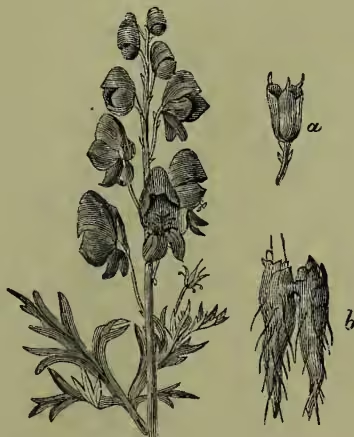
Aconite (Aconitum), a genus of Ranunculaceæ (q.v.), having five petaloid sepals, of which the upper one is helmet-shaped; and two hammer-headed petals (nectaries) concealed within the helmet-shaped sepal. The fruit consists of 3-5 follicles. A. napellus, the common Wolf's-bane or Monk's-hood, often cultivated in flower-gardens for the sake of its erect racemes of blue flowers, is a doubtful native of England, but common in some parts of Europe. The roots are fusiform and clustered. The root and whole plant are very poisonous, containing an alkaloid, called Aconitin, (q.v.). An aconite, sometimes called A. Stoecki-anum, but generally regarded as a variety of A. Cammarum, was brought into great repute on the Continent during last century by Dr Stoerck, an Austrian physician, and is still cultivated for medicinal use. The virulent bikh poison of India, equally fatal in its effects whether introduced into wounds or taken into the stomach, is prepared from the roots of several species. A. album, or white-flowered monk's-hood, a native of the Levant, and A. lyeoectonum, yellow-flowered monk's-hood, or wolf's-bane, a native of the Alps, are not infrequent in our flower-gardens.