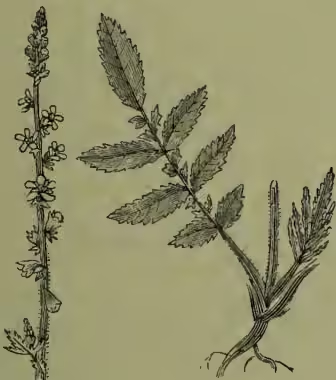
Agrimony (Agrimonia), a genus of Rosaceæ (q.v.), sub-order Potentilleæ. The Common Agrimony (Agrimonia eupatoria) is a native of Britain and other parts of Europe, growing in borders of fields, on waysides, &c. It has an upright habit, attains a height of 2 feet or more, and has interruptedly pinnate leaves, with the leaflets serrate and downy beneath. The flowers are small and yellow, in close racemes. The whole plant has a pleasant, slightly aromatic smell, and is bitter and styptic, and was much valued in domestic medicine; a decoction of it being used as a gargle, the dried leaves as a kind of herb tea, and the root as a vermifuge.—Very similar to this is A. parviflora, a native of the United States. It has a very agreeable fragrance. A. incisa is common in the Southern Atlantic States.