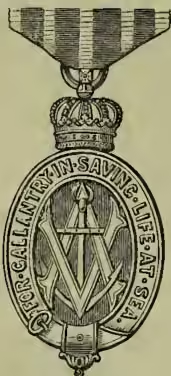
Albert Medal, a decoration which, in its original institution in 1866, was intended to reward heroic acts of mariners and others in saving life at sea. A warrant of April 12, 1867, in place of the one decoration, instituted two, called the Albert Medal of the First Class, and the Albert Medal of the Second Class. In April 1877, the Albert Medal was extended to acts of gallantry in preventing loss of life in mines, on railways, at fires, and in other perils on land. The decoration of the First Class for saving life at sea is shown in the figure, and consists of a gold oval badge enamelled in dark blue, surrounded with a Garter in bronze, with the inscription in gold raised letters. It is suspended from a dark-blue and white striped ribbon. The decoration of the First Class for saving life on land is similar, except that the enamel is red, the anchor omitted, and the word 'land' in the inscription replaces 'sea.' The ribbon is crimson and white. The badge of the Second Class differs in each case from that described by being all in bronze. A bar is attached to the ribbon as a reward for every subsequent act of bravery. Twenty years after the institution of the decoration, there were 12 First-class and 33 Second-class holders of the medal for saving life at sea, and 15 First-class and 46 Second-class holders of that for saving life on land.—ALBERT MEDAL is also the name of a distinction granted since 1864 by the Society of Arts. It was founded to reward distinguished merit in promoting arts, manufactures, or commerce; and has been conferred on many of the most notable men of science, engineers, and inventors in Britain, America, and France.