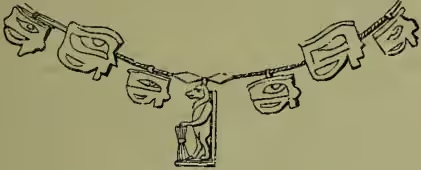
Amulet, any object worn as a charm. It is often a stone, or piece of metal, with an inscription or some figures engraved on it, and is generally suspended from the neck, and worn as a preservative against sickness or witchcraft. Its origin, like its name, seems to be oriental. The ancient Egyptians had their amulets, sometimes forming necklaces. Among the Greeks, such a protective charm was styled phylacterion. Pliny gives the Latin name, amuletum, a word of unknown origin. It has been conjecturally compared with the modern Arabic himalah-at (literally 'a carrier,' 'bearer'), now applied to a shoulder-belt or cord, frequently used to secure a small Koran or prayer-book on the breast, regarded as an amulet; but the resemblance between this word and the Latin amuletum is purely accidental. The phylacteries of the Jews (see Matt. xxiii. 5), slips of parchment on which passages of the Law were written, were evidently worn as badges of piety by the Pharisees; but were also regarded as wholesome preservatives from evil spirits, and from all manner of harm. From the heathen, the use of amulets passed into the Christian Church, the usual inscription on them being ichthus (the Greek word for a fish), because it contained the initials of the Greek words for Jesus Christ, Son of God, Saviour. Among the Gnostic sects, Abraxas stones (q.v.) were much used. Amulets soon became so common among Christians that, in the 4th century, the clergy were interdicted from making and selling them on pain of deprivation of holy orders; and in 721, the wearing of amulets was solemnly condemned by the church. Among the Turks and the tribes of Central Asia, every person considers it necessary to wear a preservative charm. With the spread of Arabian astronomy, the astrological amulet or Talisman (q.v.) of the Arabs found its way to Europe. Among amulets in repute in the middle ages were the coins attributed to St Helena, the mother of Constantine. These and other coins marked with a cross were thought specially efficacious against epilepsy, and are generally found perforated, for the purpose of being worn suspended from the neck.