Angora, or ANGWAREH (anc. Ancyra), capital of a province in the interior of Asia Minor, 230 miles ESE. of Constantinople (302 by rail, 1897). It was a flourishing city under the Persians, and was made the capital of the Roman province of Galatia Prima. It was the seat of one of the early churches, and the scene of two Christian councils held respectively in 314 and 358. Ancient remains are still to be seen, especially of a marble temple dedicated to Augustus; an inscription from it, known as the Marmor Ancyranum, has furnished important materials for the history of Augustus. A great battle between the Turks and Tartars was fought here in 1402. The present city has 40,000 inhabitants; its trade is mainly in the hands of the Armenians, who number 12,000.
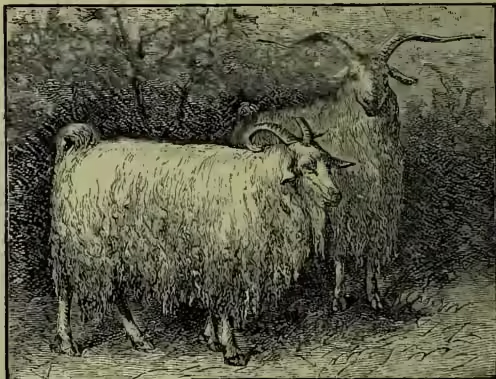
It is famous for its breed of goats, with beautiful silky hair, eight inches long. There are two or three varieties of the breed. The animal's coat is composed of two sorts of material—one hairy, short, and close to the skin; the other longer and woolly, farther from the skin. The latter is the most plentiful and most valuable. The annual export of wool from Angora is said to have a value of £200,000. Good goats are worth £50 or £60 apiece at Angora. Of this goat's hair, often called camel's wool, camlets are extensively manufactured here. Many of the animals in this region are characterised by the length and softness of their hair, especially the dogs, rabbits, and cats; but this peculiarity disappears in Europe. The Angora goat is bred for its hair, called Mohair (q.v.), in the United States and in Cape Colony, and has also been introduced into Victoria.