Aucuba, a genus of Cornaceæ (q.v.), of which the familiar, and probably the only true species is A. japonica, an evergreen shrub resembling a laurel, but, as seen in Europe, always with pale green leaves curiously mottled with yellow. It is dioecious, and until recently the female plant was alone in cultivation in Europe. The male, and also the normal green-leaved forms, have now been introduced, and many varieties are now grown. The scarlet berries are therefore becoming more frequently seen as pollination becomes possible.
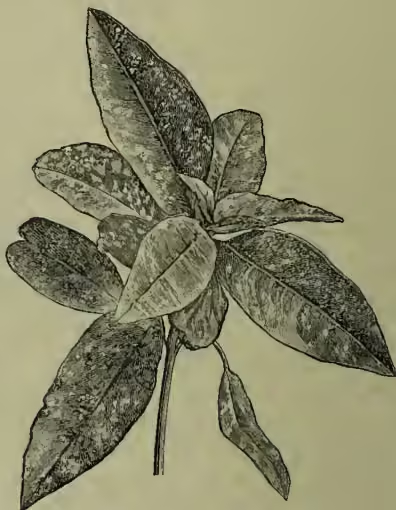
The common form has long been largely cultivated as a hardy ornamental shrub, especially in the suburbs of large towns, a situation for which it is well adapted, as it is little liable to suffer injury from smoke. It is often known as the variegated laurel, but has of course no affinity with any of the other plants popularly confused under that name.