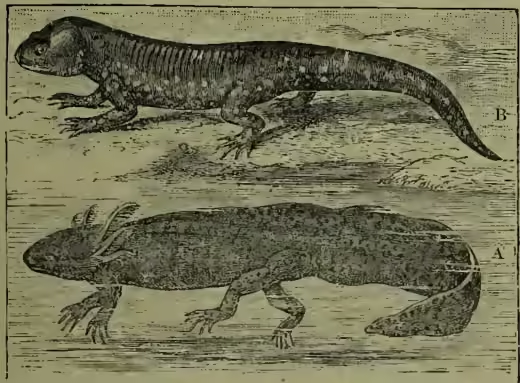
Aye-aye (Cheironomys madagascariensis), a rare and aberrant member of the Lemur family (q.v.). were known for some time before Dumeril in 1865 observed the passage of the gilled axolotl into the gill-less Amblystoma. Maria Chauvin and others have confirmed the discovery. The dry
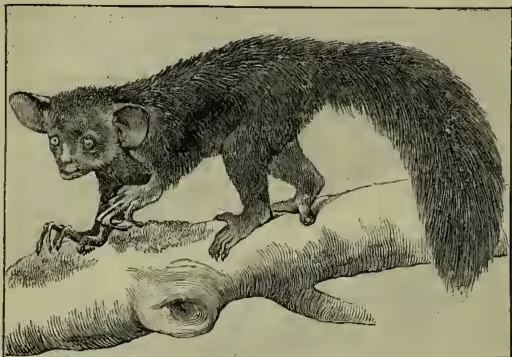
It inhabits the woods of Madagascar, and was first noted in 1780 by Sonnerat, who was said to have given it the name Aye-aye in reference to the astonished exclamation of some natives when they saw the first specimen of the curious creature caught by a European. But more probably the name is onomatopoeic, derived from the cry of the animal, Hai-hay (Hi-hi). It was for long a puzzle to zoologists; Buffon placed it beside squirrels, and Cuvier was also inclined to regard it as a rodent. It was carefully described by Owen in the Transactions of the Zoological Society, 1866, and since the publication of this beautiful and exhaustive memoir, there has been no doubt as to the position of the aye-aye as an aberrant lemur.
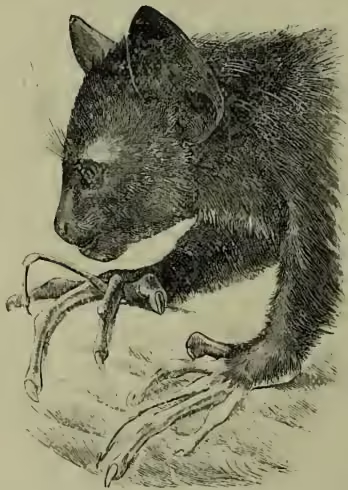
(From Owen.)
It is about the size of a cat, with thick, dark hair; long, bushy, flexible tail; large naked ears, quick to detect the faintest sound; big, well-protected eyes, suited for its exclusively nocturnal and arboreal labours; rodent-like front teeth, with which it gnaws the branches in search of boring insects; and above all, a peculiar, spidery, hairy hand, with an extremely slender, almost wire-like, third finger, which looks as if it were paralysed, but is used in detecting and picking out the favourite wood grubs. Other characters of the unique hand will be seen in the figure. Its zoological position may be stated as that of a divergent offshoot from a primitive and generalised lemur type with many rodent affinities. It sleeps all day, wrapped in its bushy tail, and often within a nest in a tree-cleft; it is very active at night, creeping along the branches with plaintive grunts, holding firm by its hind-feet, and tapping and probing with its fingers every here and there when its quick ear detects the presence of grubs. It also feeds on fruits, bamboo-pith, sugar-cane juice, and the like, and uses its long fingers very dexterously for drinking purposes. The natives of Madagascar regard this curious animal with superstitious reverence; and its peculiar structure and habits make it one of the most interesting of mammals.