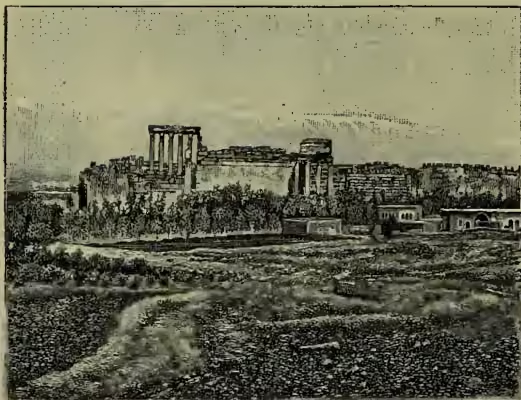
Baba, a Turkish word signifying 'father,' originating, like our word papa, in the first efforts of children to speak. In Persia and Turkey it is prefixed as a title of honour to the names of ecclesiastics of distinction, especially of such as devote themselves to an ascetic life; it is often affixed in courtesy, also, to the names of other persons, as Ali-Baba. was a rectangular building, 290 feet by 162, having its roof supported by a peristyle of 54 Corinthian columns, 19 at each side, and 10 at each end. Of these, six are yet standing. The circumference of these columns is 22 feet, and the