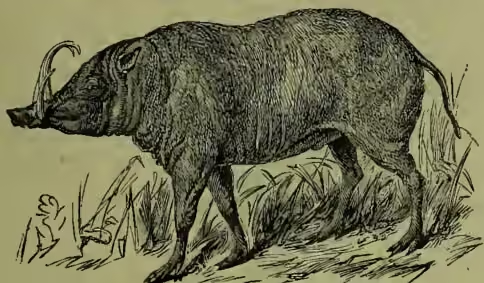
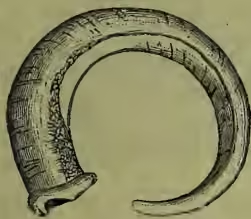
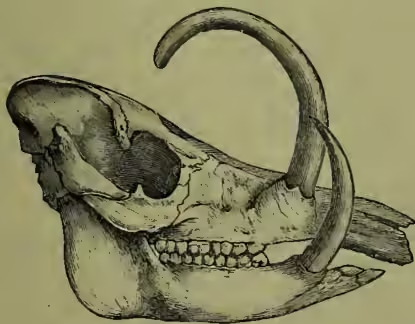
Babiroussa (Sus babiroussa), a species of hog, according to some a distinct genus, inhabiting marshy forests in Celebes and some of the smaller islands of the Eastern Archipelago. The canine teeth in the male are very large, the upper ones being curved towards the top of the head, and so like horns at first sight that the animal is often called the horned or deer hog. It is a nimbler animal than the common hog, and has much more slender legs. It swims well and frequently, is fond of eating maize, and is often killed for the sake of its flesh. It is of interest, however, mainly on account of the extraordinary development of the canines in the male. The teeth, like those of rodents (see TEETH), grow from persistent pulps, and thus admit of that extension which doubtless occurred at first as an abnormal variation, but has now become a constant character in the males. In the wild boar (fig. 2), wart-hog, &c., the upper canines, even in the female in some instances, tend similarly to curve upwards. This variation, rendered possible by the persistent pulp, and by a slight mobility of the teeth in their sockets, seems largely due to some slight displacement preventing the upper and lower canines from meeting and limiting one another as they ought normally to do. The frequent habit of rubbing the snout and teeth against hard objects would readily account for an initial displacement. What occurs to a slight extent and occasionally in certain hogs, rubbing its tusks, exhibited a very marked circular development, and would have penetrated the skull had they not been repeatedly cut (fig. 3). Though it is unreasonable to expect to find a use for every variation, it cannot be doubted that these exaggerated canines are of use to the males in fighting for the females, and are to some extent at least an outcome of the general characteristics of the sex. See SEX.