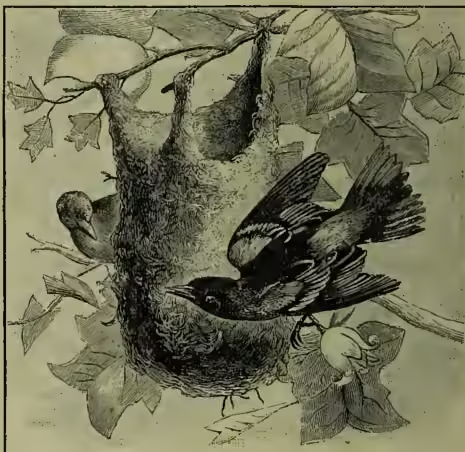
Baltimore Bird or Oriole (Icterus Baltimorei), a finch-like perching bird, very common in North America from Canada to Mexico. The males arrive from the south about the beginning of May, and are soon followed by the females. They settle near houses on tulip-trees, pea-vines, and the like, and build a beautiful hanging nest of skilfully interwoven moss and fibres. The name 'hang-nest' obviously refers to this habit. They levy contributions from any loose soft material that may come handy, such as the hairs of horses and cattle, the thread laid out for bleaching, or the strings wound round the fruit-tree grafts. The pendulous pouch measures 6 or 7 inches in length, and varies somewhat according to the climate. The bird itself is somewhat smaller than a starling, measuring about 7 inches in length, with sharp conical bill longer than the head, long pointed wings, and medium-sized rounded tail. The plumage is very gay, especially in the males, glossy black, finely contrasting with bright orange and vermilion. Orange and black were the colours of Lord Baltimore's livery, hence the name Baltimore Bird. Another of its many aliases, 'fire-bird,' describes its bright flashing appearance among the branches. The song is powerful and pleasing, and is peculiarly mellow during the love-season. These birds are gregarious, and while they do some damage by plundering pea-pods and other fruits, more than compensate for their thefts by their destruction of orchard insects like the cankerworm and tent-caterpillars. They are quick and lively in their habits, and make courageous parents. The genus Icterus must be distinguished from the true Orioles (q.v.). See Baird, Brewer, and Ridgway, North-American Birds.