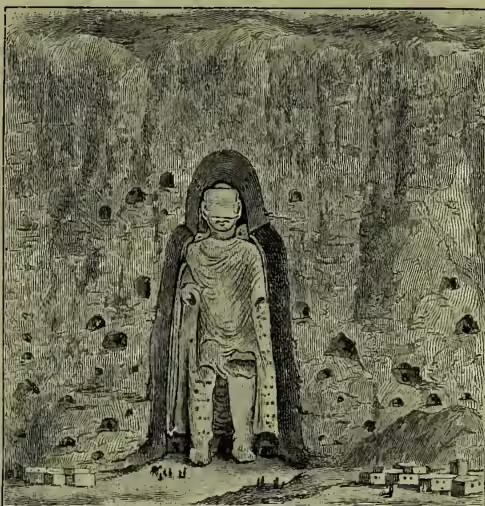
Bamián is a mountain-valley in Afghanistan, on the chief road between Kabul and Turkestan, and near the northern base of the Koh-i-baba range (see map at AFGHANISTAN). The valley itself lies 8500 feet above sea-level. The stream that drains it ultimately finds its way to the Oxus. The inhabitants are Hazáras. The most notable feature of the district is a number of human figures of enormous size carved in the conglomerate rocks, from 200 to 300 feet high, which form the northern side of the valley. Of these there are five in all; and the two principal were described by the Chinese Buddhist monk, Hwen Thsang, who visited the valley about 630 A.D. By recent careful measurement, it appears that the largest is 173 feet high, or 3 feet higher than the Nelson Monument in Trafalgar Square; the second is 120 feet; the others are about 50 and 30 feet. The figures are solidly carved in niches in the rock, but the drapery and finishing are in stucco; and they have been much damaged by cannon shot, said to be those of the army of Nadir Shah. The two larger figures are usually regarded as male and female; but it is certain that Hwen Thsang was right in regarding them both as figures of Buddha; in the Chinese traveller's time there was a large Buddhist settlement here, with 10 convents and 1000 monks, and Bamián was a 'royal city.' That the figures are the work of Buddhist artists from India seems almost certain from their style of art, as also from the pictures with which the niches in which they stand have been covered. Stairs cut in the rock enable visitors to climb to the head of the figures. About two miles east of Bamián there seems to have existed a stupendous recumbent figure '1000 feet in length,' representing Buddha entering Nirvana (q.v.); as modern travellers do not mention any traces of it, it was probably composed of rubble plastered over, and so has disappeared.
The rocks are further full of caves, the great majority of which are occupied at the present day. These caves have curious domed roofs, and are covered with pictures in the same style of art as the niches containing the statues. The caves are dug out of the rock at various heights. There is now no town of Bamián, but there are a few small villages scattered up and down the valley. See an article in the Journal of the Royal Asiatic Society (1886) by Captain Talbot, with notes and sketches by Captain Maitland.