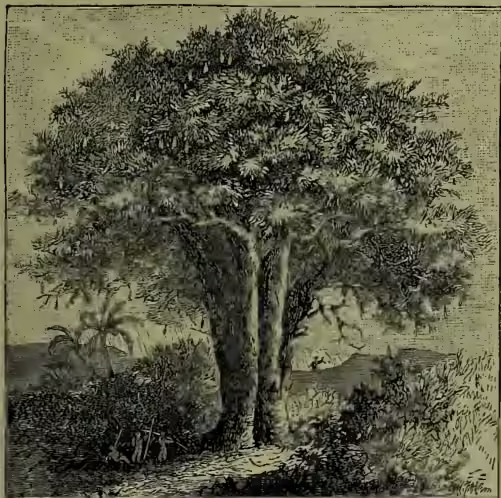
Baobab (Adansonia digitata), a magnificent tree belonging to the natural order Sterculiaceae (q.v.), also called the Monkey-bread Tree, is a native of tropical Western Africa, but now introduced into the East and West Indies. It is one of the very largest trees—not rising to a great height, but exceeding almost all other trees in the thickness of its trunk (20–30 feet). Even its branches (60–70 feet long) are often as thick as the stems of large trees, and they form a hemispherical head of 120–150 feet in diameter; their outermost boughs drooping to the ground, with large horse-chestnut-like leaves, and huge white solitary drooping flowers. The fruit (Monkey-bread) is of the size of a citron. The pounded leaves are mixed with the daily food of the inhabitants of tropical Africa; and Europeans in that country employ them as a remedy for diarrhoea, fevers, and diseases of the urinary organs. The pulp of the fruit is pleasant and slightly acid; and the expressed juice mixed with sugar is much esteemed as a refreshing and cooling beverage, specially grateful in fevers. The bark is said to be powerfully febrifugal, and yields a very strong fibre, but the wood is soft and readily attacked by fungi.