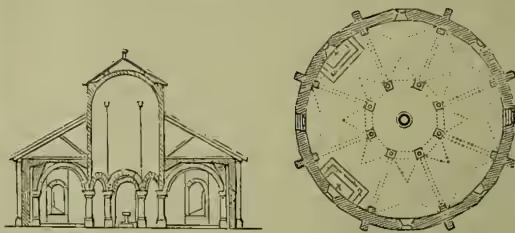
Baptistery (Gr. baptisterion, 'a large vase or basin'), the name given sometimes to a separate building, sometimes to the portion of the church in which the ceremony of baptism is performed. In the latter case, the baptistery is merely the inclosure containing the font, to be seen in most English churches. According to the earlier arrangements of the Christian church, however, the baptistery seems usually to have been a building standing detached from, though in the immediate vicinity of the church to which it appertained. It was the ceremonial building of the church, in which large numbers of converts were initiated at one time by immersion in the large font in the centre of the floor. In later times, these early baptisteries were frequently converted into churches, as in the case of Asti. At Novara, a very interesting baptistery still exists in connection with the open cloister or atrium, to which alone the neophytes were admitted before baptism. Baptistries, at first, were either hexagonal or octagonal, but afterwards became polygonal, and even circular.
The celebrated baptistery of Florence is an octagonal structure, measuring about 100 feet in diameter. It stands detached from, but in the immediate vicinity of the west end of the cathedral. It is built of black and white marble, in the style which Giotto is said to have introduced, and which is still peculiar to Tuscany. The magnificent bronze doors, with their beautiful bas-reliefs, are remarkable features of this famous baptistery. The most celebrated of the three doors was executed by Lorenzo Ghiberti, the earliest being the work of Andrea of Pisa. Fifty years were required for their completion; and it is remarkable that the contracts for their execution are still preserved. Next in importance, and of even greater size, is the baptistery of Pisa. It is circular in form, the diameter measuring 116 feet. The largest baptistery ever erected is supposed to have been that of St Sophia, at Constantinople, which was so spacious as to have served on one occasion for the residence of the Emperor Basilicus.
Detached baptisteries were common in the days of the early church, when adult baptism was practised; but on the introduction of infant baptism, buildings of this size were no longer needed, and the baptistery was absorbed into the church (see APSE). Numerous examples of circular baptisteries on the model of the Italian ones are still to be found in the south of France.