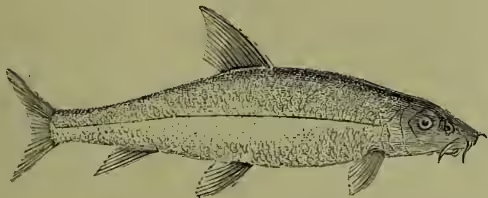
Barbel (Barbus), a genus of fishes in the family of the Cyprinidae (q.v.), differing from Cyprinus (Carp, Gold-fish, &c.) in the short dorsal and anal fins, in having one of the rays of the dorsal fin strong and serrated, and the mouth furnished with four soft tactile barbules (whence the name barbel, from Lat. barba, 'a beard'), two near the point of the snout, and one at each angle of the leathery mouth. The upper jaw also extends considerably beyond the lower. The species are very numerous. Like the other Cyprinidae, they are all inhabitants of fresh water, and generally of muddy ponds and rivers, where they seek food, especially at night, by ploughing up the mud with their snouts like swine, and are said often to seize the small fishes which come to share the worms and insects which they turn up. They also feed upon the leaves and roots of aquatic plants.—The Common Barbel (B. vulgaris) is abundant in many of the rivers of the temperate parts of Europe, such as the Weser, Elbe, and Rhine. It is the only species found in Britain, and there only in some of the still and deep English rivers. It is very abundant in the Thames, frequenting the weedy parts of the river in shoals in summer, and seeking the deeper water in winter, becoming so torpid during cold weather, that the fishermen sometimes take it with the hand, or by pushing it with a pole into a small net fastened to an iron hoop. It grows to a large size, sometimes 3 feet in length, and 15 to 18 pounds in weight; it has a long shape, in section nearly circular; the general colour of the head and upper part of the body, greenish brown, becoming yellowish green on the sides, the belly white, the fins red, and the tail of a deep purple colour. It affords sport to anglers, and is much fished about London, but is a very coarse fish, and little used for food except by the poor, who often boil bacon with it to give it a relish. The flesh is said to be improved by being kept for some days in fresh water. The larger barbels are esteemed the best. The eggs, which are very numerous, are deposited in strings about stones, and the roe has poisonous qualities, although its effects are disagreeable rather than permanently injurious.—A species, called the Binny, or barbel of the Nile, is very abundant in that river; it attains a very great size, 70 lb. or upwards.