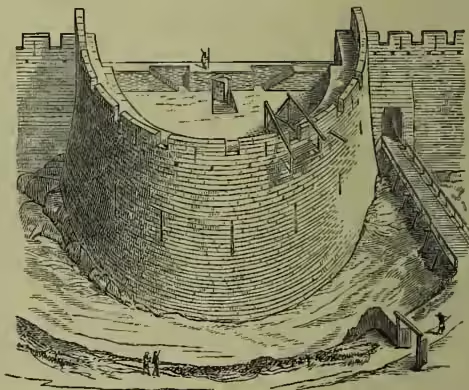
Barbican (Old Fr. barbacane, also in Spanish, Portuguese, and Italian forms; perhaps of Arabic or Persian origin—Colonel Yule suggests bāb-khānah, 'gate-house,' the usual name in the East for a towered gateway), a projecting watch-tower over the gate of a castle or fortified town. The term barbican was more specially applied to the outwork, intended to defend the drawbridge, which in modern fortifications is called the tête du pont. There are a few perfect barbicans remaining in England, as at Alnwick and Warwick; but the best example of one, as well as of the other parts of the fortification of the middle ages, is probably to be seen at Carcassonne. The street called Barbican in London, near Aldersgate Street, marks the site of such a work, in front of one of the gates of the old city.