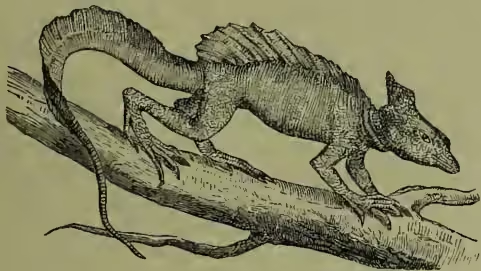
Basilisk (Basiliscus), a genus of Central American lizards, in the family Iguanidae, differing, however, from the Iguanas in the absence of a dilatable throat-pouch and of thigh-pores, and in the presence of a continuous movable fin-like crest, with supporting spines, extending from the back along the tail. The back of the head also bears a hood-like sac, projecting upwards and backwards. The body is covered with small scales disposed in zigzag fashion, and there are teeth on the palatal bones. The colour shades off from yellowish-brown to white; the total length of the common form (B. mitratus) is about two feet; the diet is largely vegetarian. They are harmless, lively animals, climbing and swimming actively, and only in their quaint form suggesting any resemblance to the mythical basilisk of the ancients, which united all the fearsome characteristics that wild imagination could invent (see below). The common hooded basilisk inhabits Guiana, Martinique, and tropical South America generally, and extends northwards into Mexico. Another larger species (B. amboinensis) inhabits the islands of the Archipelago, and its tender flesh is much used for eating. See IGUANA, LIZARD.
The fabulous BASILISK (Gr. basiliskos, diminutive of basilcus, 'a king,' so named, according to
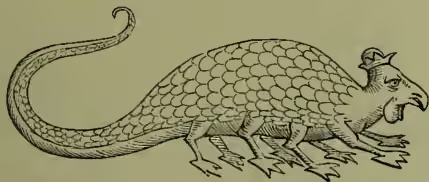
Pliny, from the spot on the head like a crown) was by ancient and medieval authors believed to be hatched by a serpent from an egg laid by a cock. It inhabited the deserts of Africa, and, indeed, could inhabit only a desert, for its breath burned up all vegetation; the flesh fell from the bones of any animal with which it came in contact, and its very look was fatal to life; but brave men could venture into cautious contest with it by the use of a mirror, which reflected back its deadly glance upon itself. Trevisa calls it the 'king of serpents that with smile and sight slayeth beasts.' It is described as about a foot long, with a black and yellow skin, and fiery red eyes; and its blood was supposed to be of great value to magicians. The weasel alone could contend with it, curing and reinvigorating itself during the combat by eating rue. The crowing of the cock was also obnoxious to the basilisk.
The word basilisk and its equivalent regulus are sometimes used in the Vulgate. The authorised English version of the Old Testament sometimes reads adder, and sometimes cockatrice (as in Isaiah xi. 8). The revised version reads basilisk.
The name was anciently applied to a large cannon, usually of brass, throwing a shot of about 200 lb. weight.