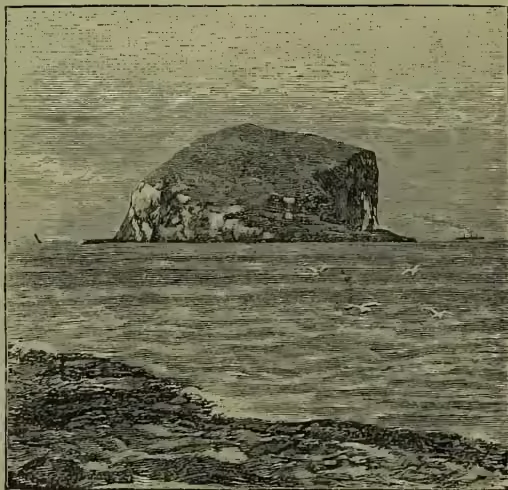
Bass Rock, a remarkable island-rock of Hadlingtonshire, near the mouth of the Firth of Forth, 2 miles from Canty Bay, and 3½ miles ENE. of North Berwick. Confronted by the ruins of Tantallon Castle, and composed of volcanic greenstone and trap tuff, it is about a mile in circumference, nearly round, and 313 feet high. It is inaccessible on all sides except the south, where it shelves down to the water, and there the landing is difficult, almost impossible when there is any swell. On the west, north, and east, the cliffs rise sheer out of the sea. They are denizened by countless numbers of solan geese and other birds, which give the rock a snowy appearance in the distance. A cavern tunnels the rock from west to east, and is accessible at low tide. In 756 St

Balthere or Baldred died in a hermitage on the Bass Rock; in 1316 it came into the possession of the Lauder family. In 1671 Charles II. purchased it for £4000, and within its dreary dungeons many of the most eminent of the Covenanters were confined during his and James II.'s reign. The Bass was the last spot in the British Islands which held out for the Stuarts. Four young Jacobite prisoners had the address to capture, and, with twelve more who joined them, to hold it for King James, from June 1691 till April 1694, against all the forces which William III. sent against them; at last the spirited little garrison surrendered on honourable terms, and only from a consciousness of failing provisions. In 1701 the fortifications were demolished. Five years afterwards the Bass passed into the possession of Sir Hew Dalrymple, to whose descendant it now belongs. The Bass is let to a 'keeper,' who pays a certain sum for it annually, the rent being made up by the sale of young geese, eggs, feathers, and oil, as well as by fees exacted from visitors to the rock. See an interesting volume on the Bass, by Hugh Miller and four others (1848).