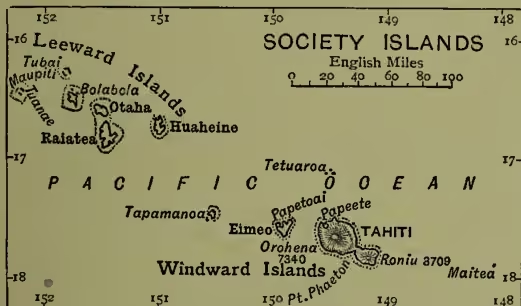
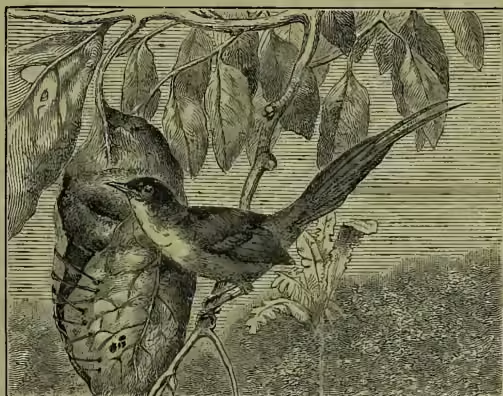
Tailor-bird (Orthotomus sutorius or Sutoria sutoria), a bird belonging to the family Sylviidæ. The male is about 6½ inches long; the general colour is olive-greenish; wings brown, edged with green; the two central tail feathers are long. It and the Leeward Islands, and stretches for about 200 miles in a north-west and south-east direction. They are composed of volcanic rocks, are mountainous (Orohana on Tahiti is 7340 feet high), and well wooded, with belts of low fertile soil along the shores. Coral-reefs encircle the separate islands, some of which are atolls, and numerous cascades foam down the mountain-sides. The scenery is magnificent, the chief island being often called 'the Garden of the Pacific.' The climate is very moist and hot (range 70° to 84° F.), but equable and healthy. Cocoa-nuts, oranges, vanilla, and all kinds of fruit are grown, as well as some cotton and sugar. Besides these things mother-of-pearl (the most valuable of all), cocoa-nut fibre, and trepang are exported. The imports (tissues, flour, wine, live-stock, sugar, coffee, coal, timber, soap) reached £116,958 in 1896, and the exports £130,795. The people cultivate for their own sustenance the bread-fruit, taro, yam, sweet potato, &c. There are several good harbours behind the shelter of the reefs; the most important is Papeete, the capital of the archipelago, which stands on the north-east of Tahiti, and has a Roman Catholic cathedral, an arsenal, and a population of 3500. The population of all the islands together, though more than half are wholly uninhabited, was 11,750 in 1895. The people, a handsome race of the Polynesian stock, are light-hearted, polite, and gay, but very immoral and untrustworthy; formerly, before they became so thoroughly Europeanised as they are now, they is common in gardens, hedgerows, orchards, and low jungle in India, Burma, and China, being found usually in pairs, but sometimes in small flocks. The name tailor-bird is derived from the way in which the nest is formed. Two or three leaves are stitched together by means of silk from cocoons, thread, wool, or vegetable fibres, the necessary holes being made by the bill. In the cup thus formed the nest is made, and consists of cotton-wool with a few horse hairs and some fine grass. The eggs are three or four in number, and are of two distinct types, the ground of the one being reddish white and of the other pale bluish green. The latter type is the rarer, and the two kinds of eggs are never found in the same nest.