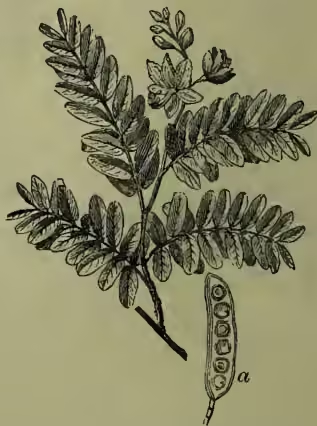
branch in flower :
a, seed-pod section.
Tamarind, a beautiful tree of the natural order Leguminosæ, sub-order Cæsalpineæ, a native of the East Indies, but now very generally cultivated in warm climates. Only one species is known (Tamarindus indica), a spreading tree, 30 or 40 feet high, with alternate pinnate leaves, which have from twelve to fifteen pair of small leaflets, and fragrant flowers, with three petals, the pods brown and many-seeded, as thick as a man's finger, and about 6 inches long. There are two varieties, the East Indian and the West Indian, the former having long pods containing from six to twelve seeds, the latter short pods with from one to four seeds. The pods are filled with a pleasant, acidulous, sweet, reddish-black pulp, in which the seeds are imbedded. West Indian tamarinds are usually imported preserved in syrup, the outer shell having been removed. The wood of the tamarind-tree, and especially of its roots, is a cabinet wood of much beauty, but of extreme hardness, so that it is wrought with difficulty. The pods of some other trees of genera allied to Tamarindus are filled with a similar pulp, which is used in the same way, as the Tamarind Plum of India (Dialium indicum), and the Brown and Velvet Tamarinds of Sierra Leone (species of Codarium).
Tamarind pulp contains citric, tartaric, and malic acids, potash, sugar, vegetable jelly, &c. It is refrigerant and gently laxative, and, in combination with more active remedies, is often employed in the diseases of children. A kind of sherbet is also formed from it; and it is an excellent addition to curries. Cold tamarind tea, made by infusing tamarinds in boiling water, forms an agreeable and cooling drink.