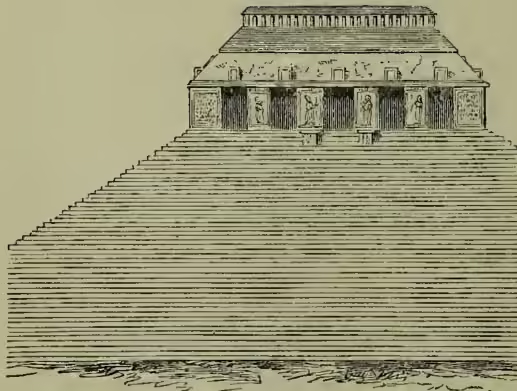
Teocalli (Mexican, lit. 'house of a god'), the name given to the temples of the aborigines of Mexico, of which many still remain in a more or less perfect state. They were built in the form of four-sided pyramids, and consisted for the most part of two, three, or more stories or terraces, with the temple, properly so called, placed on a platform on the summit. In some cases they were natural hills, faced with layers of stone, adobe, plaster, &c. The largest and most celebrated is the pyramid of Cholula, measuring 1440 feet each way, and 177 in height; it is much defaced, and the temple on its summit has been removed. The teocallis in Yucatan are in far better preservation; they are not generally built in terraces, but rise at an angle of 45° to the level of the platform, with an unbroken series of steps from base to summit. The temples on their summit are sometimes ornamented with bas-reliefs and hieroglyphic tablets. The preceding illustration gives the elevation of a large teocalli of this kind at Palenque (q.v.). Not unlike the teocallis are the palaces of the Aztec kings or chiefs. See MEXICO.