Turnstone (Strepsilas), a small genus of birds of the plover family (Charadriidae), intermediate between the true plovers and the sandpipers. The Common Turnstone (S. interpres) appears in
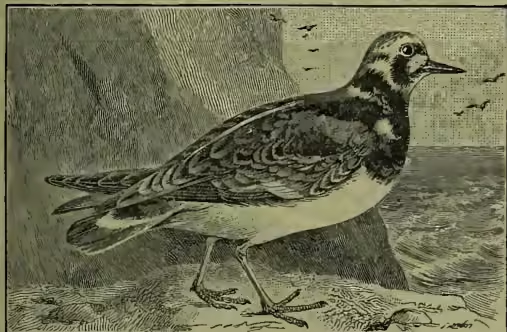
Britain as a winter migrant, but is not known to breed there; its breeding-places being the shores of the Arctic Ocean in Europe, Asia, and America, though it breeds on the coasts of Scandinavia down to Denmark, laying four eggs of a greenish-gray colour, spotted and streaked with bluish-ash and brown, in a shallow depression lined with a few dry leaves and bents. In winter the turnstone is found on the seashore all over the world, being probably the most cosmopolitan of all birds. It derives its name from its habit of turning over stones with its bill in search of its food, which consists of small crustaceans and molluscs. The common turnstone is 9 inches in length, and is handsomely marked with black, white, and chestnut; the last-named colour is reduced in autumn, when the plumage becomes duller; the legs and feet are orange. Another species, the Black-headed Turnstone (S. melanocephalus), breeds in Alaska and winters in California; and some place the Surf-bird (Aphriza virgata) in this genus.