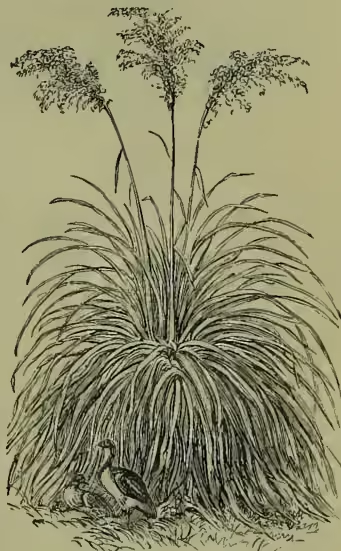
Tussac Grass (Dactylis cespitosa; syns. Festuca cespitosa, F. antarctica, F. flabellata), a large grass of the same genus with the Cock's-foot Grass of Britain, a native of the Falkland Islands, remarkable for forming great tufts, sometimes 5 or 6 feet in height, the long tapering leaves hanging over in graceful curves, from 5 to 8 feet long, and an inch broad at the base. It is, however, sufficiently delicate to be very good food for horses and cattle; and it has been tried with success in the Hebrides, Orkney Islands, and other localities in which there is a peaty soil exposed to winds loaded with sea-spray. The inner part of the stem a little above the root is soft, crisp, flavoured like a hazel-nut, and often eaten by the inhabitants of the Falkland Islands. The young shoots are boiled and eaten as asparagus.