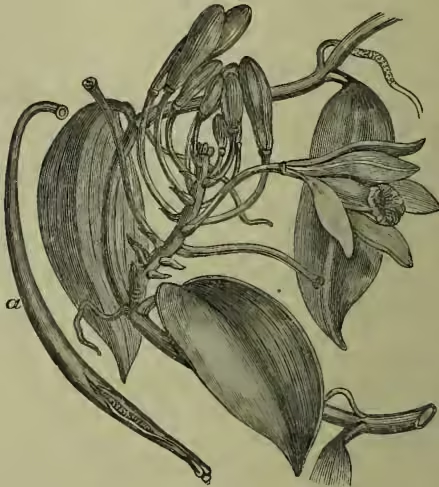
Vanilla, a genus of epiphytal Orchidæ, natives of tropical America and Asia. They are distinguished from most other orchids by their climbing habit; they cling with their aerial roots to the stems of trees or to rocks, attain the height of 20 or 30 feet, and obtain their chief sustenance from the atmosphere. There are about twenty species comprised in the genus. The flowers are thick, fleshy, and fragrant, but dull in colour. Vanilla is remarkable among orchids as possessing the only species of the order that has any economical value. From the fruit of several species the vanilla of commerce is obtained, the best being produced by the West Indian species, V. planifolia, which is now cultivated in many tropical countries. The fruit is cylindrical, about a span long, and less than half an inch thick. It is gathered before it is fully ripe, dried in the shade, and steeped in a fixed oil, generally that of the cashew nut. It contains within its tough pericarp a soft black pulp, in which many minute black seeds are imbedded. It has a strong, peculiar, agreeable odour, and a warm, sweetish taste. Benzoic acid is sometimes so abundant in it as to effloresce in fine needles. Vanilla is much used by perfumers, and also for flavouring chocolate, pastry, sweetmeats, ices, and liqueurs. Balsam of Peru is sometimes used as a substitute for it. When the fruit of vanilla is fully ripe a liquid (Baume de Vanille) exudes from it. Vanilla has ripened its fruit in British hothouses, but the flowers are apt to fall off without fruit being produced, unless care is taken to secure it by artificial impregnation. This is, in some measure, the case even in India and in some parts of America itself.