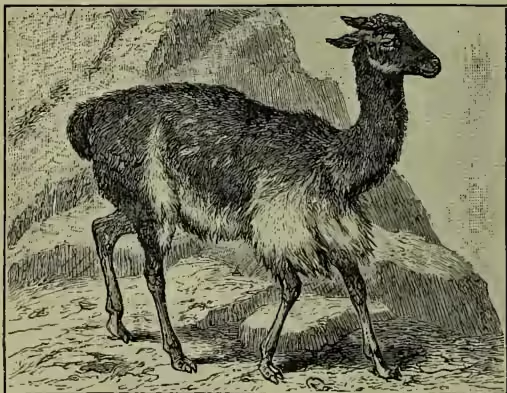
Vicuña (Auchenia vicugna), a species or variety of the South American genus Auchenia (allied to the camels), which also includes the llama, alpaca, and the guanaco. -Unlike the first two, but like the last, the vicuña lives wild. It is somewhat smaller than a European red deer; its wool is light brown with some white beneath. It frequents the most desolate parts of the Cordillera, at great elevations, and delights in a kind of grass, the
Ychu (Stipa Yehu), which abounds there in moist places. The small herds commonly include from six to fifteen females with one male. When the females are quietly grazing, the male stands apart, and carefully keeps guard, giving notice of danger by a kind of whistling sound, and a quick movement of foot. When the herd takes to flight, the male is said to cover their retreat, often pausing to observe the motions of the enemy. The vicuña is a very active animal, like the chamois or the antelope. The Indians seldom kill it with firearms, but set up a circle of stakes, about a mile in circumference, into which the vicuñas are driven. The soft wool is much valued for weaving.