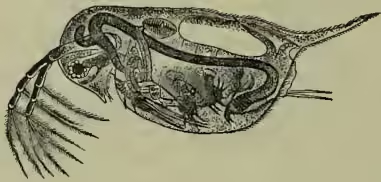
Water-flea, a popular name for minute aquatic Crustaceans such as Daphnia among Cladocera, Cypris among Ostracoda, and Cyclops among Copepoda. The common Daphnia pulex, abundant in fresh water, is a good representative. The body is enclosed in a bivalve shell; there is a large single eye; a pair of large antennæ are used as swimming organs. The Daphnids are marvellously prolific, and for prolonged periods parthenogenetic. There is an interesting difference between the winter eggs which require fertilisation and the summer eggs which do not. The females have a dorsal brood-chamber between the shell and the back. Of related genera Sida, Moina, Lyneus, Polyphemus, and Leptodora may be noted. In Cypris also the shell is bivalve; there are five pairs of appendages on the head and two on the body; most of these are used in swimming or creeping. Related to Cypris but living in the sea are Cythere, Halocypris, Cypridina, &c. Among Cyprids parthenogenesis again occurs, and in some species males have never been observed, while parthenogenetic development has been traced for as many as forty successive generations. The females bear large egg-sacs. In Cyclops the body is more distinctly segmented and the shell is not bivalve; the head bears antennæ, mandibles, and maxillæ, and the first five segments of the thorax bear swimming appendages. Resembling Cyclops and also a fresh-water form is Canthocamptus, while Cetochilus and Clausocalanus represent numerous marine Copepods. Water-fleas feed on microscopic plants and animals and on organic debris, while they themselves—often occurring in countless swarms—form an important part of the food-supply of certain fishes.