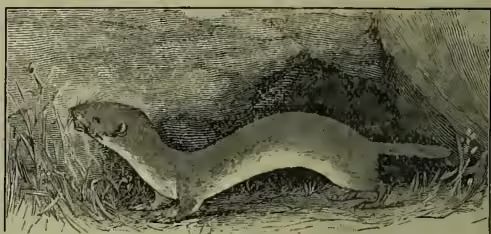
Weasel (Mustela vulgaris), a common carnivore belonging to the same genus as the marten, sable, polecat, mink, and stoat. It is widely distributed throughout Europe, northern and central Asia, and the northern parts of North America. The body of the male is about 8 inches in length, the tail 2½ inches; the female is somewhat smaller. The colour of the upper parts is reddish brown, of the under parts pure white. In northern regions and in very cold winters the weasel occasionally becomes pure white, just as the stoat becomes the white ermine. Like related species, the weasel is characterised by courage out of proportion to its size, by agility and wariness, and by pertinacious blood-thirstiness. It feeds on rats, mice, voles, moles, and frogs, but may also destroy young rabbits and birds. Often the blood of the victim is sucked and the brain eaten, or the body may be dragged home and left till it becomes semi-putrid. In its hunting it is most persevering, keen in scent and sight; it will take to the water after the water-vole, or climb to a bird's nest; it usually sleeps during the day, and is most active at night. Like many of its relatives it bites severely and has a disagreeable smell. A nest of dried leaves and moss is made in a sheltered hole in the ground or in a tree trunk, and there in spring the litter of four to six young are reared. Against hostile intruders the mother defends her offspring to the death. The fur is sometimes used, but the animal is too small to be commercially important.