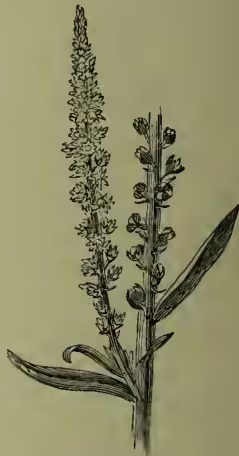
(Reseda Luteola).
Welding. When iron or steel is raised to a white heat it passes into a pasty condition, and in this state two pieces can be welded—i.e. firmly united together by pressure or hammering. The welding of two lengths of bar or plate iron can be effected more easily than can a piece of iron to a piece of steel. Mr D. Kirkcaldy has tested a number of welded tie-rods, plates, chain-links, &c., and finds that the tensile strength of a welded joint does not often exceed three-fourths of that of a solid piece of iron of the same section and kind. The chain-link welds were, however, an exception to this, some of them being nearly as strong as the solid metal. (See Kirkcaldy's Strength of Materials, Lond. 1891.) Iron tubing and other objects have recently been successfully welded by means of the heat of the electric arc, which, however, does not readily admit of an area of more than two square inches being done at a time. (For an account of this method of electric welding, see Engineering for December 25, 1891.) Most metals pass too rapidly from the solid to the liquid state to admit of being welded. Horn and especially tortoise-shell among animal substances can be welded when they are softened by heat.