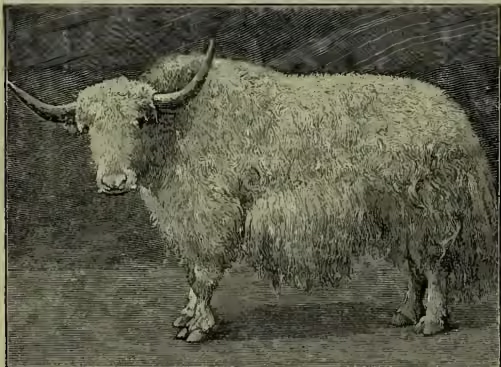
(From a Photograph by Gambier Bolton, F.Z.S.)
Yak (Bos grunniens), a species of ox found in Tibet, and domesticated there. The wild yak of central Asia is the largest native animal of Tibet, and is found only near the limits of perpetual snow, descending into the higher wooded valleys in winter, and ascending in summer to the pastures of short grass, some of which are at an elevation of 17,000 feet above the sea. It is very fierce, falling upon an adversary not only with its horns but with its chest, and crushing him by its weight. The domesticated yak, which forms great part of the wealth of the inhabitants of the highest and coldest regions of central Asia, is about the height of an English ox, which it much resembles also in body, head, and legs; but it is covered all over with a thick coat of long silky hair, that of the lower parts of the body being very long and hanging down almost to the ground. The neck is short; the rump is low; the legs are short. Over the shoulders there is a bunch of long hair; and the tail is covered with a prodigious quantity of long flowing hair. Black and white are the most prevalent colours. The great quantity of hair gives the yak an apparent size far beyond the reality. Its characters seem to bridge over the gulf—not a very wide one—between the sheep and oxen. The yak does not low like an ox, but utters a short grunting sound. Its milk is very rich, and yields excellent butter and curd. The yak is never used for tillage or draught, but as a beast of burden travels twenty miles a day. The hair is spun into ropes, and made into coverings for tents; the soft fur on the hump and shoulders is made into a fine and strong cloth.