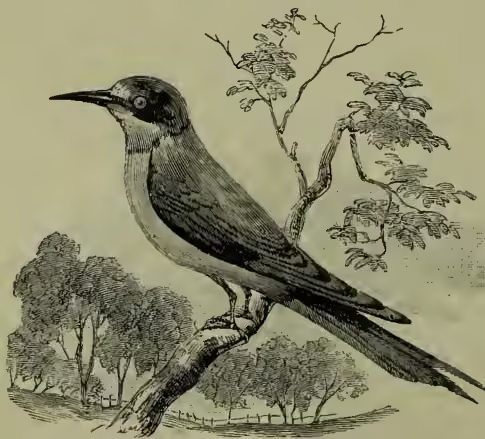
Bee-eater (Meropidae), a family of birds nearly allied to kingfishers. Numerous forms occur, widely distributed in Africa, India, Moluccas, and Australia, and are well known for their bee-eating propensities and bright plumage. The Common Bee-eater (Merops apiaster) very rarely occurs in Britain, but is an exceedingly abundant summer visitor in Southern Europe. Even Aristotle speaks of its ravages among the bees, which the bird seizes on its swallow-like flight, or by watching beside the hives. They excavate long holes which honeycomb the banks of rivers like the Don and Volga.
These nests are sometimes 10 feet deep, and the wearing away of the rather long bill testifies to the amount of labour which they expend to secure the safety of the young. These are often seen sunning themselves at the openings of the holes, tumbling back when alarmed by the approach of reptilian or other enemies. When the flowers wither and the bees cease to work, the birds migrate southwards, and breed again in Africa, where Livingstone has described their excavations on the banks of the Leeba. Their bright, predominantly green plumage is often used to decorate ladies' hats, and they have further some practical importance on account of their destructiveness to bees, which is compensated to some extent, however, by their ravages among wasps and other insects. The Hottentots watch their flight in order to find the bee-nests.