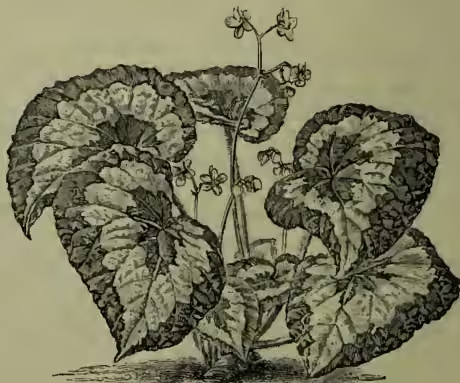
Begonia. This genus (which gives its name to a small order of doubtful affinities) contains a large number of species which are cultivated in our greenhouses, partly on account of their usually pink, unisexual flowers, and partly for their remarkable unequal-sided and often coloured leaves, to which they owe such various popular names as 'Elephant's ears' in the East Indies, or, more poetically, 'Angel's wings' in the Spanish Antilles and Mexico. They are almost all tropical plants; but a small species of Begonia ascends the Himalayas to at least 11,500 feet, often growing on the trunks of trees. The leaves and young stems are succulent and acid, and those of several species are used as pot-herbs or in tarts like rhubarb. The roots of some are used in their native countries as astringents, and some of the Mexican species are used as drastic purgatives. According to Loudon, begonias were introduced into Great Britain from Jamaica in 1777, but they were little cultivated till 1840.