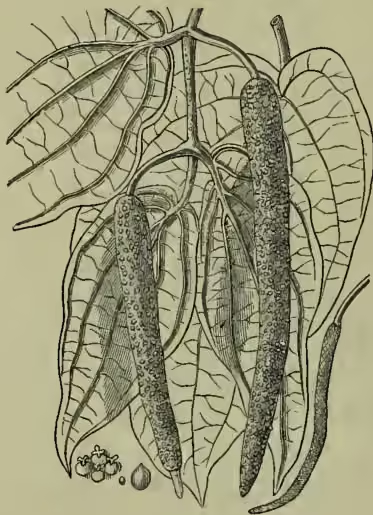
Betel, properly the leaf of the betel-vine, a plant (Chavica betle, C. siraboa, &c.) of the natural order Piperaceæ, indigenous to the East Indian Archipelago, and cultivated also in continental India, Ceylon, and several of the Indo-Chinese countries (Burmah, Siam, &c.), but more or less as an exotic according as the necessary conditions of humidity and heat have to be artificially increased. The name betel (a Malayalam and Tamil word for 'leaf') is frequently applied to the bolus of areca-nut and shell-lime (chunam) wrapped round with betel-leaf, employed as a masticatory throughout a large part of the farther East, especially by the Malay and Hindu races. As early as Fryer (1673) betel begins to be used erroneously as a synonym for the nut of the Areca (q.v.) palm. Betel-leaf (Hindustani, pān or pawn; Persian, tambul; Malay, sirih) is described in glowing terms in the Hitopadesa, book iii., fable 9. The ancient Hindu writers recommend it to be taken early in the morning after meals, and at bedtime. Pills against phlegm are rubbed into an emulsion with the juice; and the leaves are applied to remove headache, reduce swollen glands, or check the secretion of milk. The use of the masticatory has become a matter of etiquette, and the betel-box plays as important a part as the snuff-box did in England in the 18th century. In India the offering of pawn by the host intimates the termination of a visit. Among the Malays of the Archipelago to offer sirih is accepted as a legal sign of apology for a serious offence. Europeans seldom take kindly to the habit of chewing betel, partly because it blackens the teeth and causes the lips to appear as if covered with blood. Sir James Emerson Tennent (Ceylon) considers that it supplies the antacid, the tonic, and the carminative required by a people who usually eat no flesh. In former days the betel-leaf was a monopoly of the East India Company. The cultivation of the plant is in many districts a highly important industry, and requires considerable capital. In Bombay, betel-vines are put down in October, 3600 to 5000 per acre. They are sheltered from drought by plantains grown along with them, and by bamboo stages covered with grass. These are afterwards replaced by stronger and taller trellis-work up which the plants climb luxuriantly. In Tenasserim, again, the Karens train the vines to forest-trees from which all but the topmost boughs have been lopped off. See Marsden's History of Sumatra; Curtis's Botanical Magazine (vol. vi. new series); Miguel, Systema Piperaccarum; Hunter's Gazetteer of India.