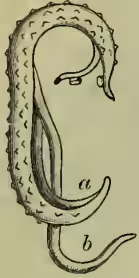
BilharZIA (Distomum or Gynæcophorus hæmatobius), a parasitic flat worm in the fluke or Trematode order, and belonging either to the same genus as the common liver-fluke (D. hepaticum), or to one very closely related. The most remarkable fact about this worm is the separation and relation of the sexes. In all other Trematodes the sexes are united, the animals are hermaphrodite, but here a grooved canal, formed from two folds of skin on the ventral surface of the larger male, contains the female. Pairs thus united are found in the portal and other vessels in the abdominal region, both in men and monkeys. They are especially abundant in boys, and cause hæmaturia and other troubles. These are mainly due to the inflammation caused by the deposition of the ova in the vessels of the mucous membrane of ureter, bladder, intestine, &c. They occur from Egypt southwards to the Cape. It is said that about half of the Fellah and Copt population of Egypt sniffer from this parasite. The embryos are ciliated, but the life-history is not known. See FLUKE.