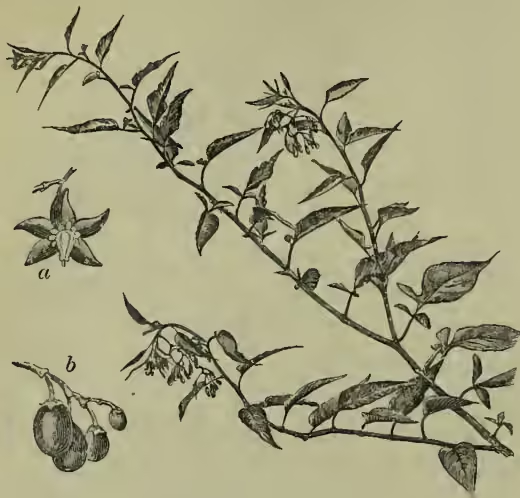
a, a flower; b, fruit.
Bittersweet, or WOODY NIGHTSHADE (Solanum dulcamara), a plant found in hedges and thickets in Britain, and throughout the palæarctic region, also introduced into North America. The root is perennial and creeping; the annual stems climbing and trailing, 4 to 6 feet in length; the leaves acuminate with 2 lateral pinnae, the upper halbert-shaped; the flowers purple, in drooping corymbs, much resembling those of its congener, the potato, but much smaller, followed by ovate red berries of tempting appearance, which, although by no means approaching in poisonousness to those of the true nightshade (see BELLADONNA), contain an apparently variable quantity of alkaloid, and seem sometimes to have been the cause of accidents, particularly to children; although some physiologists have administered it without bad effects. The twigs, collected in autumn after the leaves are fallen, are still occasionally used in medicine, a decoction being given in rheumatic or cutaneous affections. It is in the stems rather than in the fruit that the peculiar succession of tastes, to which the plant owes its name, is best observed.