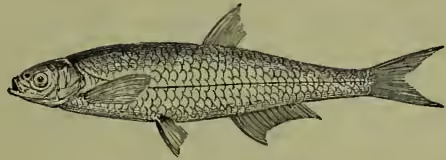
Bleak (Alburnus lucidus), a little fresh-water fish belonging to the great Carp family (Cyprinidæ), in the Physostomi division of bony fishes, in which the air-bladder (if present) opens into the gullet. Roach, dace, and minnow are familiar allies. The body is elongated and compressed, and measures 6 or 7 inches; the mouth is directed upwards; the chin projects; the nature of fins and tail is shown in the figure. The upper surface is bluish green, the sides and under surface silvery, the fins white or transparent. The bleak is common in European rivers north of the Alps, and especially frequents quiet flowing water. Its active motions on the top of the water are familiar to anglers on English rivers. These fish form a large part of the food of pike, trout, and such fishes. Cooked like sprats, they are a satisfactory dish. As in related forms, the scales are coated internally with a silvery substance, which has for many ages been used for producing artificial Pearls (q.v.) and the like.