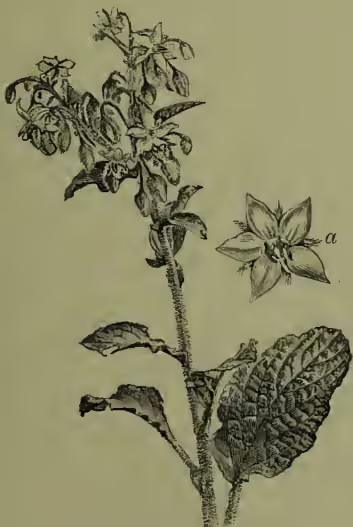
a, a flower.
Borace, Borago, or Borrage, a genus of Boraginaceæ (q.v.), of which the three species are all natives of the countries around the Mediterranean. The Common Borace (Borago officinalis) is found in waste places in many parts of Europe, and is pretty frequent—no doubt naturalised—in
Britain. It is a herb of somewhat stout and coarse appearance, but is easily recognised by its scorpioid cymes of few large ( in.) beautiful blue flowers with purple-black anthers, spurred at the back. Borace was formerly much cultivated and highly esteemed, being reckoned amongst the cordial flowers, and supposed to possess exhilarating qualities, for which it no longer receives credit. The belief in its virtues was at one time extremely prevalent in England, its very name being, according to some, a corruption of corace, and its use correspondingly universal. The flowers were put into salads, Gerard tells us (1597), 'to make the mind glad;' and he adds: 'There be also many things made of them, used everywhere for the comfort of the heart, for the driving away of sorrow, and increasing the joy of the mind.' It was also frequently put in wine, and although it has no sensible properties, its traditional virtues still retain for its leaves a place in the preparation of claret-cup. The young leaves and tender tops are pickled, and occasionally boiled for the table, and are still used in salads in Germany.