Bronze Age, a term in prehistoric archaeology, denoting the condition or stage of culture of a people using bronze as the material for cutting-implements and weapons. As a stage of culture, it comes in between the use of stone and the use of iron for these purposes. It is not an absolute division of time, but a relative condition of culture, which in some areas may have been reached earlier, in others later, while in some it may have been prolonged, and in others brief, or even, as in the Polynesian area, it may have been non-existent in consequence of the people passing directly from the use of stone to that of iron. A bronze-age people in one region may thus have been contemporary with a stone-age people in another, and with an iron-age people in a third; that is to say, the succession of the three ages was not necessarily synchronous, either in contiguous or in widely separated areas. The Homeric poems depict the culture of a people passing from the use of bronze to that of iron. The Mexicans and Peruvians, on the other hand, were still in their bronze age in recent times. The bronze age of Europe generally is marked by the use of certain forms of implements and weapons, as well as by certain conditions of life and customs of burial, which differed from those of the preceding age of stone and of the succeeding age of iron.
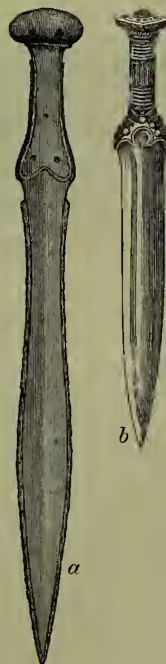
a, Bronze sword found in Edinburgh, 20 inches in length; b, Danish bronze dagger, 13 inches in length.
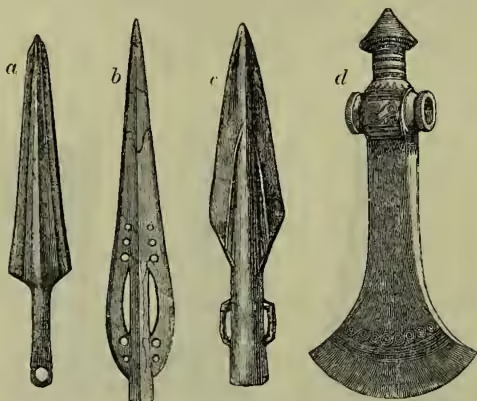
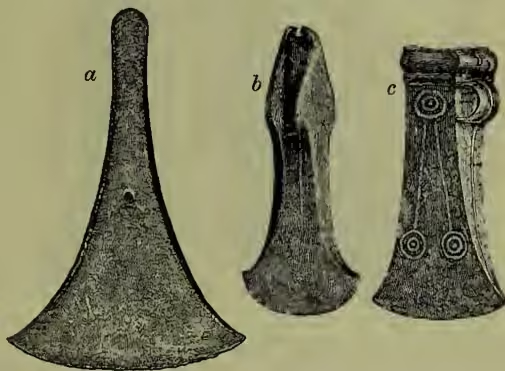
The implements and weapons of the bronze age include knives, saws, sickles, awls, gonges, hammers, anvils, axes (fig. 1), swords, daggers (fig. 2), spears (fig. 3), arrows, shields (fig. 4). The forms of each class differ in different areas, and vary with advancing time. Blades and axes, which were at first made with tangs to be inserted in the handles, became socketed for the insertion of the handles; and articles which it was at first the custom to finish in the mould were finished with the hammer, and shields, and vessels made of hammered plates were ornamented with chasing and repousse work. The ornamentation of the bronze age consists chiefly of concentric circles, spirals, and bosses. The workmanship is always of a very high order, the shapes graceful, and the finish fine. The moulds used for casting were of stone, or bronze, or clay. The system of coring was carried to great
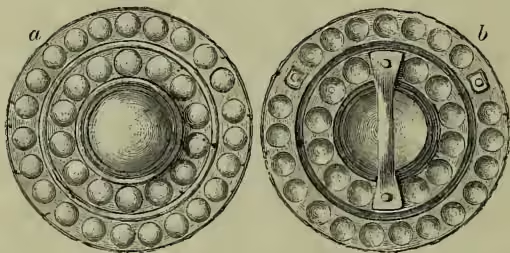
Bronze shield (a, front; b, back view), 13½ inches in diameter. perfection, and many of the more difficult castings were turned out in a manner that would do credit to the most expert of modern workmen. The composition of the bronze varied considerably, but may be stated in general as about 90 per cent. of copper to 10 per cent. of tin. See Evans's Bronze Implements of Great Britain; Chantre's Age du Bronze en France; Anderson's Scotland in Pagan Times (2d series, The Bronze and Stone Ages, 1886); and works named under ARCHEOLOGY.