Bubalis, a genus in the Antelope division of hollow-horned even-toed Ruminants, not to be confused with the genus Bubalus—the Buffalo (q.v.). The species of Bubalis are among the more ox-like antelopes, and one of them is supposed to be the Bubalus of the ancients. In this genus the head is elongated, the snout broad, the horns twisted and present in both sexes, the tear-pits small, the back sloping off behind, the teats two in number.
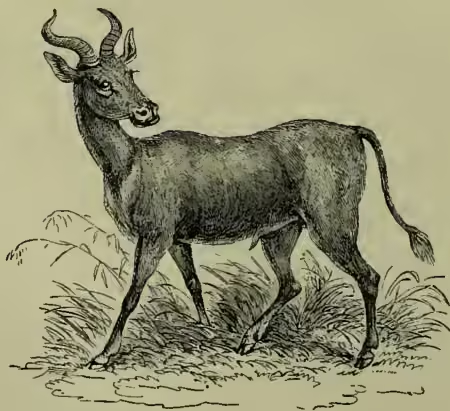
The Bubaline of the North African deserts (B. mauretana = Antilope bubalis) is a handsome animal of a reddish-brown colour, standing about 5 feet high at the shoulder, living in herds, and readily tamed. It is figured on Egyptian monuments. The Hartebeest (B. caama) is found in the south, is perhaps slightly larger, has a general gray-brown colour (black on the outside of the legs and on middle of forehead, with large white spots on haunches), and is at home on the mountains. The Sassaby (B. lunata), the Bastard Hartebeest of the Cape Colonists, is slightly smaller, and is differently coloured. The Bontebok (B. pygarga) is a smaller and more beautifully coloured form of the southern interior, where another species, the violet-coloured Blesbok, is also abundant. See ANTELOPE.