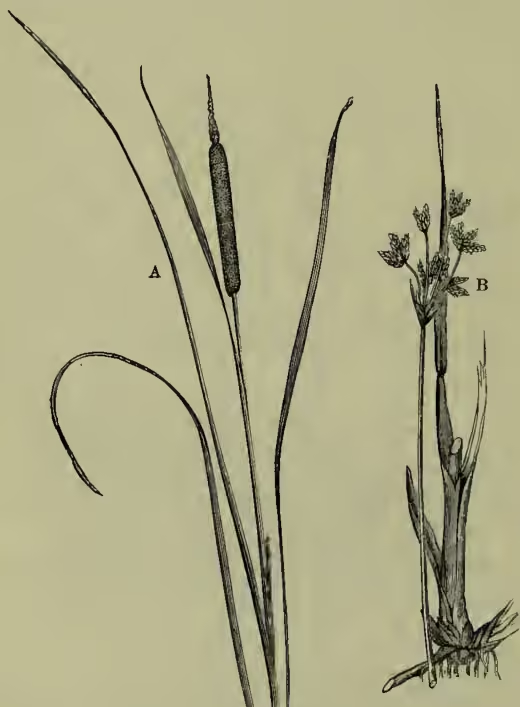
Bulrush, an English popular name for large rush-like or reed-like plants growing in marshes, not very strictly limited to any particular kind. The application of the term, both in literature and botany, has hesitated particularly between two distinct plants of tolerably similar vegetative habit—Typha latifolia and Scirpus lacustris. The former of these, also called Reed-macc or Cat's-tail, belongs to the Typhaceæ; it is a large handsome plant of grass-like habit, and reaching a height of 5 to 7 or 8 feet. The characteristic long flowering heads bear the male above the female flowers, although other species are dioecious. The cloud of pollen is collected to adulterate the Lycopodium (q.v.) of pharmacy; the rhizome is astringent, but contains starch used by the Kalmucks; and the shoots of this and allied species are eaten by the Don Cossacks, and hence are sometimes called Cossack Asparagus. The stems of bulrushes are used in many countries for thatching and fuel, the leaves for mats, chair-bottoms, packing, &c. The woolly fruiting heads are also used as packing material, and in combination with feathers to stuff beds.
The other and apparently rightful claimant of the name bulrush belongs to the Cyperaceæ. There are about 50 species of Scirpus, widely distributed through all climates, and applied to almost identical uses with the preceding where they sufficiently abound. It is easily recognised by its compound umbel-like (but probably cymose) heads of spikelets. One species, S. tuberosus, is cultivated in India as a source of starch. The common British species may reach a height of 8 feet, and like Typha grows in vast swamp jungles along the margins of lakes and slow-running streams, to which they impart a characteristic picturesqueness. S. maritimus grows extensively along the shores of the Baltic.