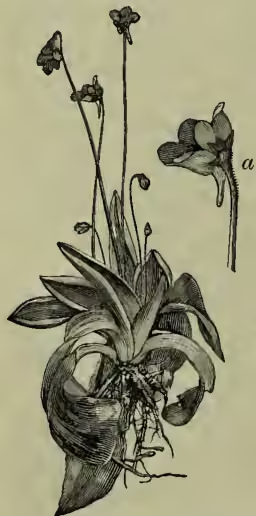
a, a flower.
Butterwort (Pinguicula), a genus of Lentibulariaceæ (q.v.), small plants with a characteristic rosette of large spreading entire radical leaves, common in bogs and marshes. The Com- mon Butterwort (P. vulgaris) is abundant in the northern parts of Britain and of Europe, and grows in Canada. Its leaves are covered with a multitude of stalked glands, which yield a viscous insect-catching secretion (hence pinguicula, 'greasy'), which also contains acid and pepsin, and has active digestive properties (see INSECTIVOROUS PLANTS). Hence it has also the power of coagulating milk, and is used for this purpose by the Laplanders. Some species possess flowers of much beauty, especially P. grandiflora. North and South America have several species of butterwort.