Buttress, a projection for the purpose of giving additional support or strength to a wall. In the classical style there were no visible buttresses, their structure being, to a certain extent, supplied or concealed by pilasters, antæ, &c. The different stages of Gothic architecture are marked by the form of buttresses employed, almost as distinctly as by the form of the arch. In early Romanesque the buttresses frequently presented the form of a pillar, after the tradition of classic art. The Norman buttress was generally broad, with slight projection, and finished on top with a splay against the wall; but it was also occasionally semicircular, like a half column applied to the wall. Early English buttresses project much more boldly, and are considerably narrower than the Norman. They are frequently broken into stages, which diminish in size as they ascend. In the Decorated style, this division into stages is almost inevitable, the buttress being often supplied with niches terminating in pinnacles, and very highly ornamented with carving, statues, &c. In the Perpendicular style they frequently assume more fantastic forms, sometimes presenting a sharp external angle and being adorned with applied pinnacles, &c. Flying buttresses are half arches thrown from detached piers or buttresses against the upper parts of vaulted structures in order to abut and carry off the outward pressure of the arches. This expedient for supporting lofty vaults was first invented in France in the 12th century.
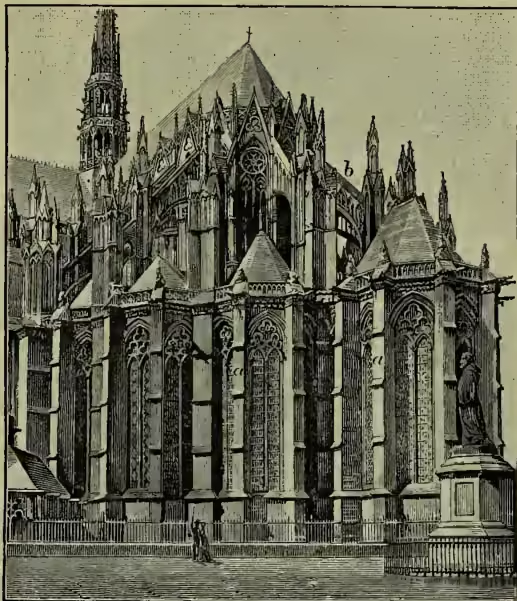
a, buttresses; b, flying buttress.
It became one of the chief factors in the growth of the Gothic school, and, crowned with lofty pinnacles, the French buttresses formed one of the principal decorations of the exterior of French cathedrals. They were introduced into England at the period of the Early English.