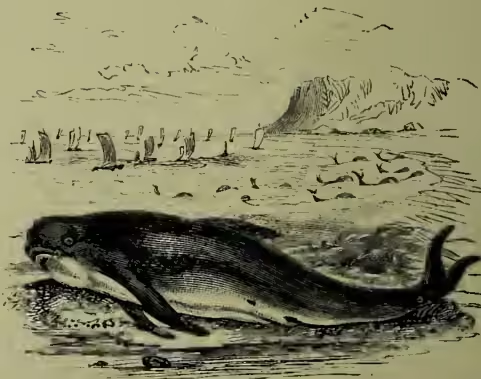
Caaing Whale (Globicephalus melas), one of the Cetacea, in the dolphin family, belonging to a genus common in all seas, and oftener stranded than any other 'whale.' The skull is broad and depressed; snout and brain-case are about equal in length; the front of the nose-like head is rounded by a cushion of fat in front of the blow-hole; there are about a dozen small conical teeth above and below; the fore-limbs are very long (5 feet) and narrow, and situated far below; the dorsal fin is low and triangular; the tail is deeply forked. The smooth skin of the common species is of a uniform black colour, except a white streak along the ventral surface. The total length varies from 16 to 24 feet, the maximum girth about 10 feet. The caaing whale is very gregarious, and vast shoals of 50 to 100 sometimes impetuously follow their leader ashore, when alarmed and surrounded in a bay or fiord. Exciting scenes of this sort have been frequently witnessed on the Faroe Islands and elsewhere. It is recorded that 1110 were killed in the winter of 1809-10 at Hvalfiord in Iceland. In temper the animals are mild compared with some of their allies. They feed chiefly on cuttle-fishes. Many names are given to these common cetaceans—e.g. Pilot-whale, Black-fish, Social Whale, Grindhval, &c. The common name is derived from the Scotch word caa, meaning 'to drive.' Several species are distinguished in different seas, but the characteristics are trivial, and somewhat vague.