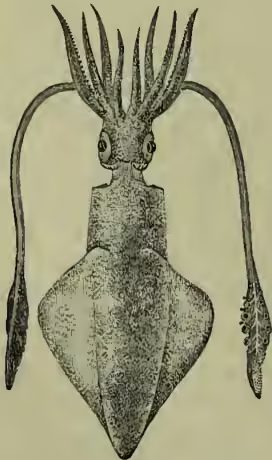
Calamary, or SQUID, a popular name applied to numerous forms of Cuttle-fish or Cephalopoda (q.v.), but more especially to the common Loligo vulgaris. The genus belongs to a family known as Myopsidae, including Cephalopoda with ten arms, a horny (except in Sepia) pen, the remnant of a shell, and a cornea closing the eye. The body is long, pointed behind, and bears two triangular posterior fins. The skin round the mouth bears suckers; the two longest seizing-arms bear four or more rows of suckers, and are not entirely retractile; one of the shorter arms becomes much modified in the male to form a 'hectocotylus' or sperm-holding organ. About two dozen species of Loligo are known from all seas, and some fossil forms occur in the Jurassic strata. The Common Calamary (Loligo vulgaris) has a pinkish or yellowish white colour, with purplish-brown spots, and measures a foot and a half or more in length, not including the arms. It is common in the Atlantic and Mediterranean, swims actively in shoals, and is sometimes eaten, or used as bait. For further details, see CUTTLE-FISH.