Calamus, the traditional name of the Sweet Flag (Acorus Calamus), which is no doubt the 'Calamus Aromaticus' of Roman authors, and probably the sweet calamus and sweet cane of Scripture, although it has, however, been attempted to identify calamus with one of the fragrant grasses (see LEMON-GRASS) which yield the grass-oil of India. The sweet flag, although resembling Iris in habit, belongs to the order Aroideæ, and is widely distributed through the Eastern palearctic region, and is also indigenous to North America. It is said to have been introduced into Europe from Asia Minor in the 16th century, and is now widely naturalised in ditches and by the sides of ponds.
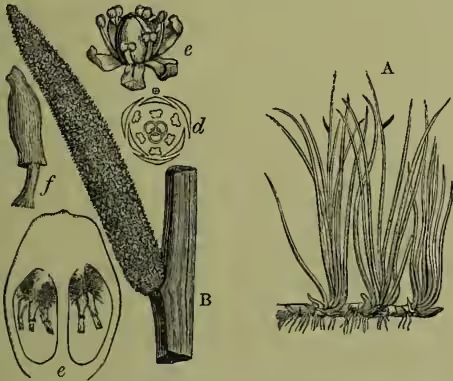
Hooker indeed regards it as a native of Britain. The root-stock yields an aromatic stimulant and tonic, which has fallen into disuse in regular medicine, but is still of high repute in the East. It is in fact cultivated in Ceylon and Burma. It is sometimes used to flavour beer, and in the perfuming of tooth-powder and snuff; and was masticated to clear the voice and sweeten the breath. It is also made into confections and used in the preparation of liqueurs in Germany, &c. The plant was formerly used to strew floors instead of rushes, and particularly in cathedrals on festival days. The name Calamus is also given to a genus of palms. See RATTAN, and DRAGON'S BLOOD.