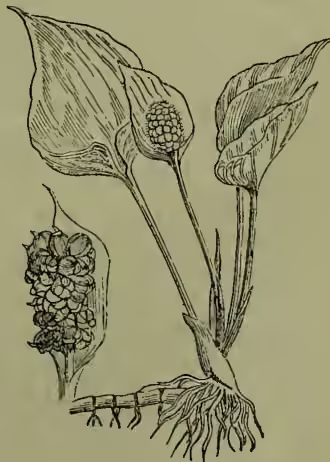
Calla, an aquatic or marsh-loving genus of Araceæ (q.v.), with beautiful white spathes, cordate leaves, flowers crowded up to the extremity of the spadix, and red berries. Calla palustris is widely distributed through the marshes of palæarctic and neoarctic regions, and acquires some economic importance in Lapland and parts of Russia (Vitebsk) from the fact that its root-stock, like that of so many other members of the same order, is a wholesome source of starchy matter, used in bread-making, after its acrid and poisonous properties have been removed by washing and cooking. The well-known and beautiful Richardia æthiopica, often popularly called 'Lily of the Nile,' was formerly included in this genus, and is often still called Calla.