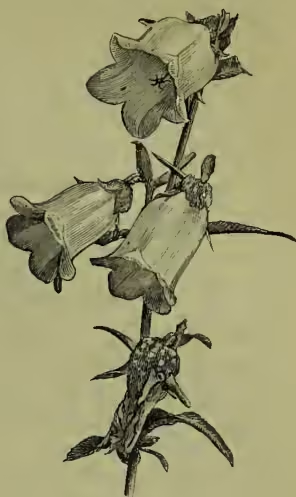
Campanula (Lat., 'a little bell'), a genus of Campanulaceæ (q.v.), commonly known as Bell-flowers or Bells. The species number about 200, chiefly palæarctic, but found as alpine plants in warmer and southern regions. The flowers are generally beautiful, and many are cultivated. The common wild C. rotundifolia is, however, more familiar than any other species, both on account of its commonness and simple beauty, and as the
Harebell (q.v.) of English poetry and Bluebell of Scottish song. C. Trachelium, the nettle-leaved campanula, and C. glomerata are not uncommon, both wild and in cultivation; but the biennial species, so familiar in gardens as Canterbury Bells, is C. medium, a native of Central Europe, which has yielded many florists' varieties, presenting great diversity of colour, size, and doubleness. As annuals and perennials for the herbaceous border and rock-garden many other species and varieties are esteemed; while C. rapunculus (Rampion or Ramps) was formerly more cultivated than at present on account of its esculent root, the leaves being also used in salads.