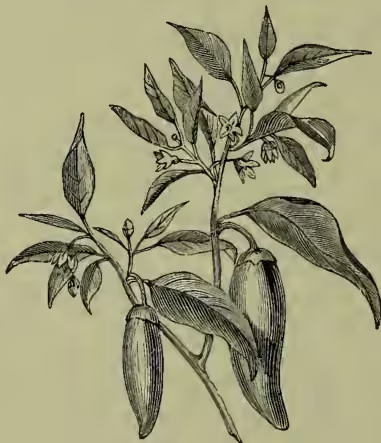
Capsicum, a genus of Solanaceæ, yielding the powerful condiment variously known as Pod Pepper, Red Pepper, Guinea Pepper, Chillies, Capsicum, &c. The species are all of a shrubby, bushy appearance, and have more or less woody stems, although they are annual or biennial plants. Some of them are in very general cultivation in tropical and subtropical countries for their fruit, which is extremely pungent and stimulant, and is employed in sauces, mixed pickles, &c., often under its Mexican name of Chillies; and when dried and ground, forms the spice called Cayenne Pepper. As a condiment it improves the flavour of food, aids digestion, and prevents flatulence; while in medicine, besides being sometimes given to promote digestion, it furnishes a useful local stimulant, especially as a gargle, and sometimes also as a liniment. The so-called capsicin is a mixture of resinous and fatty matters, with a volatile alkaloid. The species and varieties are not easily discriminated; their fruits especially differing in form, size, and colour, but Flückiger and Hanbury ascribe the supplies of capsicum imported to Britain to two species: (1) C. fastigiatum, as furnishing the greater quantity of pod pepper; and C. annuum (longum, grossum), as yielding the larger sorts of this, as well as most of the cayenne pepper imported as powder.