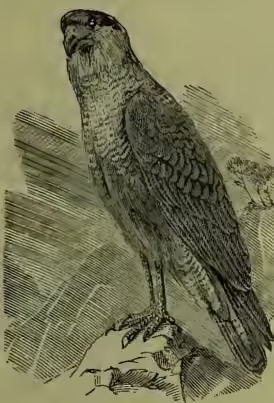
(Polyborus brasiliensis).
Caracara, a Brazilian name applied to several of the falcon-like hawks, and especially to Polyborus brasiliensis. The name refers to the hoarse cry. They keep a good deal to the ground, and a web joins the base of the two outer toes to the middle one. Ibycter is a closely allied genus, and the southern caracara (Ibycter australis) the best-known species. Darwin, in his Beagle voyage, gives an interesting account of their mischievous and passionate habits. The bare skin of the face changes in colour according to the flow of blood associated with emotion. Ibycter australis frequents the
Falkland Islands; Polyborus brasiliensis spreads from Brazil over a large extent of America, and even reaches occasionally the southern parts of the United States.